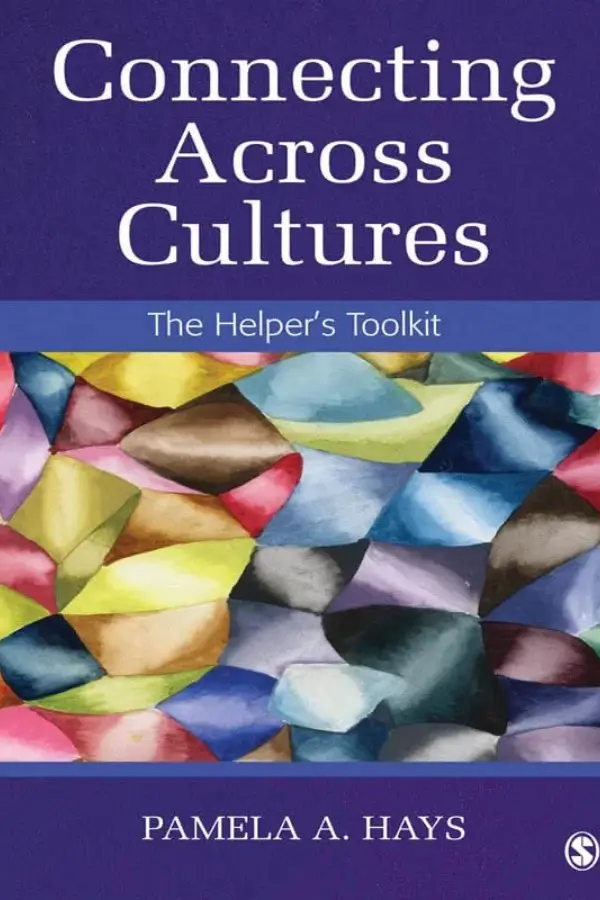
Thousand Oaks, CA: SAGE.
136pp. ISBN: 9781452217918.
Chock-full of fun exercises, surprising tips, and real-world case examples, Connecting across Cultures: The Helper’s Toolkit provides both students and professionals in social services, health care and education with the skills to develop respectful, smooth relationships with their clients and with the community at large. The book offers communication tools to defuse defensive interactions, resolve conflicts constructively, and engage respectfully. Written in a warm, inviting style, the author shares her own mistakes as she explains what not to do and how to do it better. The book provides practical, hands-on strategies for connecting with people across differences related to ethnicity, race, religion, nationality, sexual orientation, disability, age, gender, and class. Because cross-cultural relationships add a level of difficulty to all the usual relationship challenges, this book will help you with every relationship you may encounter.
Reviews
“Excellent addition to the field!
I have been a fan of Pamela Hays’s work for many years (her ADDRESSING model is a huge contribution to the field of multicultural counseling), and this book follows her other work in being thoughtful, well-organized, and relevant. The vignettes in this book are especially helpful due to their complexity. Instead of creating a situation in which “right” and “wrong” moves are easily seen, these vignettes deal with situations that are more nuanced and call for careful thought before proceeding — I think this may be especially helpful for many who know the basics of how to interact with dissimilar others in a surface way but might inadvertently make mistakes (sometimes with large consequences) with regard to interacting with them on a deeper level. Would highly recommend this book.”
“… a very helpful guide to making connections with diverse clients. It’s written by Pamela Hays who is also the author of other excellent multicultural assessment and treatment materials. What I like best is not only the fact that it will help counselors and psychotherapists develop their cultural self-awareness, cultural knowledge, and culturally-oriented therapy skills, but that it’s also written in a manner that’s very clear and consequently, very accessible. It has many different reflective learning activities and concrete examples focusing on language and behavior that will help contribute the the reader’s cultural sensitivity.”